
What Happens In Your Brain In The Seconds Before You Yell

It is twenty to seven. You have asked him four times. The fifth time, your voice comes out at a volume you did not choose.
He goes still. You watch his face change.
Later you go looking for the moment you decided. You do not find one. There is a gap where the calm parent used to be, and then there is shouting.
This is about that gap. What is inside it. And why it was already filling long before he ignored you the fourth time.
Yelling at your child is a stress response, not a decision. Under load, the amygdala reacts before the thinking part of your brain can step in.
Yoo and Walker found in 2007 that amygdala reactivity to upsetting images ran about 60% higher after a night without sleep. The trigger was the last event, not the first.
What is happening in your brain in the seconds before you yell?
Your body starts the sequence before you know it has started. Your brain reads something as a threat. Not danger. A loss of control. Stress chemistry rises. Access to the thinking part of your brain drops. Your voice goes up. By the time you notice the volume, you are already four steps in.
That is the gap.
It is not a memory problem. There was no decision to remember. You are looking for a choice in a place where a choice was never made.
The alarm part of your brain is called the amygdala. Its job is speed. It does not check with you first. It cannot tell the difference between real danger and a small threat to your sense of control, and at twenty to seven on a Tuesday, the fourth ignored request is a threat to your sense of control.
The part that would have said this is your child, stop is slower. Some nights it is too slow.
Why some nights and not others depends on what you arrive with.
In 2007, Seung-Schik Yoo, Ninad Gujar, Peter Hu, Ferenc Jolesz and Matthew Walker scanned people after a night without sleep. When shown upsetting images, their amygdala response was about 60% stronger than in people who had slept. The connection to the front of the brain, the part that keeps the alarm in proportion, was weaker.
Same person. Same image. Different brain, because of sleep.
One honest note, because you deserve the whole picture. In 2019 a research team in Stockholm ran a study on sleep restriction and did not find the same brain effect. They questioned whether that exact mechanism is the right explanation.
So the brain story is not settled. The everyday story is. Tired people react faster and harder. That part holds across a large body of work, and you have tested it yourself more times than you would like.
Here is the reframe worth carrying out of this section.
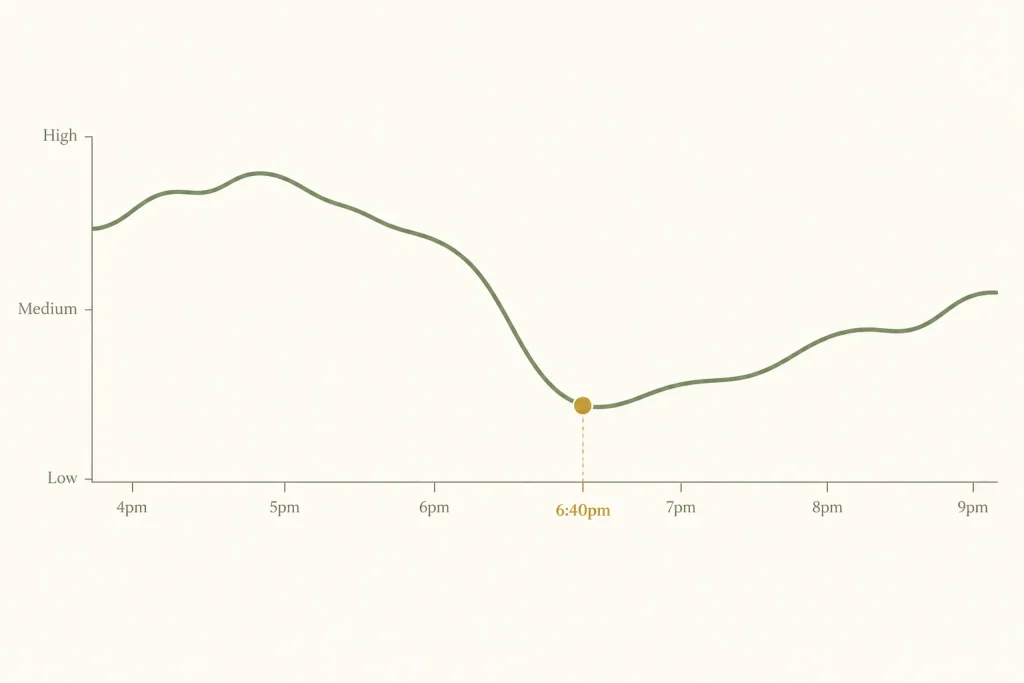
Time | What you had left |
7:00am | Full |
10:00am | Full |
1:00pm | Holding |
4:00pm | Thin |
6:00pm | Almost nothing |
6:40pm, the fourth request | Floor |
Why do you yell at the child you love most?
Because your nervous system holds itself together in front of people it does not feel safe with, and lets go in front of people it does. You are not worse at home. You are unguarded at home. From the inside, unguarded and depleted feel the same, and they arrive at the same hour.
You were fine at work.
You were polite to a man who was rude to you at four o’clock. You did not raise your voice once in ten hours.
Then you walked through your own front door and lasted twenty minutes.
You have read that as evidence. Proof that the calm was the real you and the shouting is the real you, and that the person your child gets is the true one.
Read it the other way.
Holding yourself together in front of people takes effort. You spent all day spending it. At home you stop spending, because home is the one place you are not performing.
There is a second thing happening, and it is physical.
When your child is distressed, his stress signals land in your body directly. His tone. His volume. The way he moves. Your system picks all of it up and starts matching him.
So you are not only managing your own state. You are absorbing his while yours is already low.
Two dysregulated people in one small kitchen, and one of them is four.
You do this only with your child. That is a fact about closeness. You have been reading it as a fact about your character.
Why does it happen at 6pm and not at noon?
Because your ability to stay calm is a resource with a daily curve, not a personality trait you either have or do not have. It runs down through the day. Sleep debt, hours without food, the number of decisions already made, the noise, the times you have already redirected him. By six there is almost nothing left to spend.
You were not calmer at noon because you were a better parent at noon.
You were calmer because the tank was full.
In August 2024 the US Surgeon General published an advisory called Parents Under Pressure. It reported that a third of parents described high stress in the past month, against a fifth of other adults. Nearly half said that most days their stress was completely overwhelming. Among adults without children, that figure was about a quarter.
You are not running low because something is wrong with you. You are running low because that is the ordinary condition of the job right now.
There is a name for what happens when it does not refill.
In 2018 Isabelle Roskam, Maria Elena Brianda and Moïra Mikolajczak built a measure of parental burnout. They found four parts to it. Exhaustion in the parent role. Feeling fed up with the role. Pulling back emotionally from your children.
And one more.
A contrast with the parent you used to be.
Read that again if you need to. The feeling that you liked yourself better as a parent last year is not a private failing you invented. It is a measured thing, common enough that researchers built an instrument around it.
What is the half second where you wanted him to be scared?
There is a moment inside the shout where part of you wants him frightened. It is brief. It passes. And it is the thing you have told nobody. What it is: a threat response reaching for the fastest tool available, because fear is fast. It is about ending the moment. It is not about hurting your child.
I am going to say it plainly, because saying it around the edges is what makes it grow.
For a moment, you wanted him afraid of you.
Not hurt. Afraid. Just enough to stop.
You have carried that alone since it happened, and the silence around it has made it feel like a report on who you are.
It is not.
A system under threat reaches for whatever ends the threat quickest. Fear ends things quickly. Your nervous system knows that and it does not consult you before suggesting it.
Here is the line that matters.
An impulse is not an intention. An intention is not an act.
You had an impulse. You did not act on it.
The reason it feels enormous is that you have never heard another parent say it. People who work with families hear it constantly. Parents say it almost never. That gap between how common it is and how often it is spoken is doing all the damage.
If the impulse comes often, or if it points toward harm rather than volume, or if it frightens you, that is worth saying out loud to your family doctor or a therapist. Say it exactly as it is. They have heard it before.
It was a Tuesday. I had been at the office since eight that morning.
I had not eaten anything all day.
By six my jaw was hurting. My chest was hurting. There was pain in my head and across my shoulders, and it had been there for hours.
My son asked for pizza.
It was the fourth time he had asked.
My voice went up. I do not remember deciding anything.
He was frightened. I watched it happen on his face. Then he went silent.
Then I was silent too.
I stood there in that quiet and thought about what I should have done instead.
Is yelling at your child actually harmful?
Yes, when it becomes a pattern. In 2013 Ming-Te Wang and Sarah Kenny published a study of 967 families in Child Development. Harsh verbal discipline at age thirteen predicted more conduct problems and more depressive symptoms later. Over two years the size of the effect was similar to what other studies found for physical discipline. Warmth from the parent did not cancel it out.
That last line is the one that takes the air out of the room.
You have been telling yourself that he knows you love him. That the hug afterwards counts for something. Wang and Kenny found that the strength of the bond did not soften the effect.
I am not going to soften it either. You would find it anyway, at midnight, on a page with no mechanism and nobody to tell it to.
Now the part that page will not tell you.
That study measured a sustained pattern. Repeated harsh verbal discipline, in early adolescence, tracked across two years.
It did not measure one Tuesday in one kitchen.
That is not a loophole. It is what the study actually looked at, and the difference between a pattern and an incident is the difference the research itself is built on.
And there is a number in the same 2013 release that almost nobody quotes.
A nationally representative survey found that about 90% of American parents reported at least one instance of harsh verbal discipline. For the more severe forms directed at teenagers, the figure was around half.
Nine parents in ten.
The pages that took the harm from that release left this number sitting right beside it, untouched.
Closer to an incident | Closer to a pattern | |
How often | Now and then, in hard weeks | Most days, whatever the week |
What it sounds like | Volume | Volume, plus names and insults |
What comes after | Repair, usually the same day | Silence, or the next round |
What you feel after | Guilt | Very little, or relief |
What your child does | Comes back to you | Braces first, or stops coming back |
What it is about | The moment | The child |
A way of seeing your own week more clearly. It is not a diagnosis, and no table can give you one.
None of this makes Thursday easier.
Knowing the mechanism will not stop your voice going up the next time you arrive home empty at twenty to seven. That is not what it is for.
What it does is make the pattern visible. And a visible pattern is the only kind anyone has ever changed.
That is the honest cost of reading this. You now have to look at the week instead of the night.
Why does the guilt arrive after and not during?
Because the part of you that produces guilt was not in the room while it was happening. Access to it dropped when the alarm went off. It comes back online a few minutes later, walks in, and sees what was done. The guilt is not late. It arrived as soon as it could.
You have taken the timing as proof of something bad.
You felt nothing at the time. Then twenty minutes later it hit you.
That order looks damning. It is not.
The guilt is the thinking part of your brain coming back. A parent who felt nothing afterwards would be the one to worry about. You felt it, which means it returned.
There is a second thing you have probably noticed.
He forgave you quickly, and it made it worse.
You wanted the account settled. Quick forgiveness leaves it open, and you have been paying interest on it every night since.
Replaying it at one in the morning does not repair anything. It repairs nothing and it spends tomorrow’s reserve tonight, which makes tomorrow’s twenty to seven harder than it needed to be.
What can you actually do in the two minutes before you walk in the door?
Anything that works has to happen before the alarm goes off, not during. Counting to ten fails because it asks the part of your brain that has already gone offline. You are not bad at it. It is prescribed for the wrong minute. The useful minutes are the ones before you open the door.
Five things. Small enough to do while exhausted, which is the only test that matters.
- Stop before you go in. Ninety seconds in the car, or standing in the corridor. Not to become calm. To put a line between the two days.
- Name the state, not the day. Say it to yourself. Empty. Wired. Angry already. Naming it lowers it. Rehearsing the whole day raises it.
- Eat something. Unromantic and load bearing. Hours without food is one of the few things at six o’clock that is still in your hands.
- Lower the bar out loud. Fed, safe, in bed. Everything else tonight is optional.
- Walk in with your first sentence already chosen.
Walking in
“I am here. Give me one minute and then I am yours.”
When you feel it rising
“I am getting loud. I am going to step out for a minute and come back.”
After, if you did shout
“I shouted. That was mine, not yours. I am sorry. I am still here.”
The third one matters more than the first two. Repair does not need the shouting to have not happened.
Does getting it wrong mean you have broken something?
No. Edward Tronick and Andrew Gianino measured how often parents and children are actually in step with each other. Even in healthy, secure pairs, it was about 30% of the time. The other 70% is out of step, followed by coming back together. The repair is not damage control. It is the part that builds the child.
Read that number again.
Thirty percent.
Not ninety. Not the number you have been holding yourself to since the first parenting article you ever opened.
Most of the time, in every good home, a parent and a child are slightly out of step with each other. Then they find each other again. Then they lose it again. Thousands of times.
Tronick’s point is that the losing is not the failure. It is the mechanism. Children learn to steady themselves by going through small manageable ruptures and coming back, over and over. A child who never experienced one would have nothing to practise on.
Which means your scoreboard is wrong.
You have been measuring against never. Never raise your voice, never lose it, never be the parent you were on Tuesday.
The research measures something else. Shorter. Quieter. Repaired faster. Further apart.
On that scale, look at what you have already done and not counted.
You left the room instead of saying it.
You stopped halfway through the sentence.
You did not say the worst thing, and you know exactly which sentence you did not say.
You apologised the same night.
You went six days, and then broke on the seventh, and you have spent all week thinking about the seventh.
Count the six.
It is twenty to seven again. Same kitchen. Same fourth request coming.
Nothing about tonight is easier than last Tuesday.
But you know something now that you did not know then. Your body began this at four o’clock. The request only arrived last.
And the child in the doorway is not keeping the ledger you are keeping. He is waiting to see if you come back.
You almost always come back.
‘’He is not keeping score the way you are.’’
The next one lands in a fortnight.
Written at a kitchen table in Lahore, for parents who already feel bad enough.
Questions parents ask
Do all parents yell at their children?
Close to it. A nationally representative survey reported in 2013 found that about 90% of American parents had used harsh verbal discipline at least once. For harsher forms aimed at teenagers, it was around half. Common does not mean harmless. It does mean you are not unusual.
Why do I feel guilty after yelling at my child?
Because the part of your brain that produces guilt had reduced access while it was happening. It comes back online a few minutes later and sees what was done. The guilt is not evidence that you are a bad parent. It is evidence that your thinking brain returned.
Is yelling at a child as harmful as hitting?
Wang and Kenny found in 2013 that over two years, the effects of harsh verbal discipline on adolescents were similar in size to those found for physical discipline. That study measured a sustained pattern across years, not one bad evening. The distinction between a pattern and an incident is real.
Is it normal to feel like you want to frighten your child?
The brief impulse to end a moment through fear is a threat response reaching for the fastest tool it has. An impulse is not an intention. If it happens often, points toward harm rather than volume, or frightens you, tell your doctor or a therapist exactly that.
Sources
- Wang, M.-T. and Kenny, S. (2013). Longitudinal links between harsh verbal discipline and adolescents’ conduct problems and depressive symptoms. Child Development.
- Society for Research in Child Development (2013). Press release accompanying the above, including national prevalence figures.
- Yoo, S.-S., Gujar, N., Hu, P., Jolesz, F. and Walker, M. (2007). The human emotional brain without sleep. Current Biology.
- Stockholm sleep-restriction replication study (2019), which did not reproduce the above effect.
- Roskam, I., Brianda, M. E. and Mikolajczak, M. (2018). The Parental Burnout Assessment.
- Office of the Surgeon General (2024). Parents Under Pressure.
- Tronick, E. and Gianino, A. Research on mismatch and repair in parent and child interaction.
Muhammad Zubair Sarwar writes FamilyBloomHub from Lahore, Pakistan. He is an engineer, twenty-two years at a national power utility, and a father. He completed Yale’s Introduction to Psychology and the University of Sydney’s Positive Psychiatry and Mental Health, both online and non-credit, in 2025.
He is not a clinician, and nothing here is diagnosis or treatment.